Types Of Bathroom Floor Tiles: How To Choose The Best Option For Your Home
- What Type Of Floor Tile Is Best For A Bathroom?
- What Should You Consider When Choosing Bathroom Floor Tiles?
- Porcelain Bathroom Floor Tiles
- Ceramic Bathroom Floor Tiles
- Porcelain And Ceramic Tiles: Which Is Better?
- Natural Stone Bathroom Floor Tiles
- What Tiles Work Best In A Small Bathroom?
- Bathroom Tiles And Underfloor Heating
- Choosing Tiles For A Wet Room Floor
- What Is The Current Trend In Bathroom Tiles?
- Why Choose Mermaid Bathrooms?
- Get In Touch With Mermaid Bathrooms
- Frequently Asked Questions
Choosing bathroom flooring is partly about appearance, but the material also needs to cope with moisture, regular cleaning and everyday use. With so many types of tile flooring for bathroom renovations available, it helps to understand how the main materials differ before deciding on colours, patterns and finishes.
Porcelain tiles are often chosen for their durability and water resistance, while ceramic tiles provide a wide range of decorative options. Natural stone tiles such as marble, limestone and slate can give a bathroom a more distinctive finish, although they usually require more maintenance.
At Mermaid Bathrooms, we design and install bespoke bathrooms throughout Thurrock and surrounding areas of Essex. Our team can advise on floor tiles as part of the wider bathroom design, so the flooring works with the walls, furniture, sanitaryware and the way the room will be used.
What Type Of Floor Tile Is Best For A Bathroom?
Porcelain is one of the most versatile materials for a bathroom floor because it is dense, highly durable and nearly non-porous. It works particularly well in busy bathrooms where the floor needs to withstand frequent use without requiring much maintenance.
Ceramic tiles can also be a good choice, particularly when you want more flexibility with colours and patterns. Natural stone offers a different look altogether, with marble, limestone, granite and slate providing the variation that comes from using a natural material.
There is no need to choose the floor in isolation. Mermaid Bathrooms works with porcelain, ceramic, marble, granite, mosaic and natural stone as part of our professional bathroom tiling service, allowing the flooring to be considered alongside the rest of the room.
What Should You Consider When Choosing Bathroom Floor Tiles?
Bathroom tiles need to perform well in a space where humidity, splashes and wet surfaces are unavoidable. Before choosing a particular style, consider slip resistance, water absorption, maintenance and the size of the tiles themselves.
Slip Resistance
A bathroom floor can become slippery quickly, so the surface finish matters. Matt and lightly textured floor tiles usually provide more grip than polished or very glossy tiles.
An R10 slip rating is commonly considered for general bathroom floors, while areas exposed to more water may require a higher level of slip resistance. Product specifications should always be checked before ordering, particularly when tiles are being used around showers or on a wet room floor.
Glossy tiles can still work very well elsewhere in the bathroom. On bathroom walls, for example, a glossy finish can reflect light and help brighten a small bathroom without creating the same underfoot concerns.
Water Resistance
Porcelain tiles are particularly suitable for bathrooms because they have a very low water absorption rate. Ceramic floor tiles can also perform well when they are designed and rated for bathroom use.
Natural stone varies considerably. Marble, limestone and some other stone tiles require sealing to protect them from excess moisture and staining. Terracotta tiles and traditional cement tiles also need to be treated properly if they are used in a bathroom.
Water resistance is not only determined by the visible surface. Correct preparation and waterproofing underneath the tiles are essential, particularly around showers and wet room areas.
Maintenance
If low maintenance is a priority, porcelain and ceramic tiles are usually straightforward choices. They can generally be cleaned using normal bathroom cleaning methods without the regular resealing associated with many natural stone surfaces.
Marble, limestone and other natural stone tiles require more care. The correct cleaning products should be used, and the surface may need regular resealing depending on the material and finish.
Stone-effect porcelain can be useful when you like the appearance of natural stone but would prefer something easier to maintain.
Porcelain Bathroom Floor Tiles
Porcelain tiles are kiln-fired at high temperatures, producing a dense and hard-wearing material that is highly water-resistant. These characteristics make porcelain particularly well suited to bathroom floors that need to withstand everyday use.
The design range is also extensive. Porcelain can recreate the appearance of marble, limestone, slate, granite, concrete and wood, giving homeowners plenty of options without having to use the original natural material.
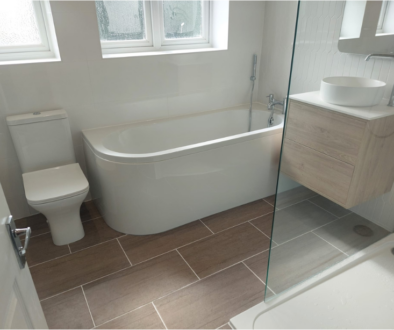
Wood-effect porcelain is popular where a warmer look is wanted. It can introduce the colour and grain associated with wood while providing a surface better suited to a room that regularly experiences moisture.
Marble effect porcelain works in a similar way. It can recreate the veining and variation of marble while avoiding much of the maintenance required by genuine marble tiles.
For a modern bathroom, larger tiles can create a cleaner finish with fewer grout lines. Smaller tiles can still be useful where the floor has more complicated shapes or needs to follow gradients.
Ceramic Bathroom Floor Tiles
Ceramic tiles are lighter than porcelain and are available in a particularly wide range of colours, patterns and various shapes. They work well in bathrooms where the flooring is intended to contribute more strongly to the overall design.
Patterned tiles can suit period properties, while simpler ceramic finishes can complement modern bathrooms. Traditional ceramic tiles can also be paired with contrasting wall tiles to introduce texture without making the whole room feel overly decorative.
The important distinction is between ceramic wall tiles and floor tiles. Some products are designed only for bathroom walls and may not have the strength or slip resistance required for floors. Always check that a ceramic tile is specifically suitable for floor use.
Porcelain And Ceramic Tiles: Which Is Better?
Porcelain and ceramic tiles are both widely used in bathrooms, but porcelain is generally denser and more resistant to water. That can make it particularly useful in family bathrooms or spaces that experience heavier everyday use.
Ceramic provides more flexibility where decorative choice is the priority. Various colours, glazed finishes and patterns make it easy to create a bathroom with more character.
The decision often comes down to how the room will be used and the finish you want to achieve. Through our bathroom design service, Mermaid Bathrooms can help coordinate porcelain and ceramic tiles with the other materials used across the room.
Natural Stone Bathroom Floor Tiles
Natural stone tiles have variations in colour, veining and texture that make each installation slightly different. Marble, limestone, slate and granite can all be used to create very different bathroom styles.
Unlike porcelain, natural stone usually requires additional care. Sealing may be needed to protect the surface, and some stones need specialist cleaning products to prevent marks or damage.
Marble Tiles
Marble is often used in bathrooms where a more luxurious finish is wanted. Its natural veining works across both floors and walls and can create anything from a subtle neutral design to something much more dramatic.
As a natural material, marble requires more maintenance than porcelain. It can be affected by unsuitable cleaning products and needs to be sealed correctly.
Marble effect porcelain is an alternative for homeowners who like the appearance of marble but want a lower-maintenance bathroom floor.
Limestone, Slate And Granite
Limestone has softer colours and a more understated natural feel, making it well suited to neutral bathroom design. It works particularly well alongside warm woods, cream tones and muted colours.
Slate has a more textured appearance and often comes in darker shades. It can add depth to contemporary or rustic bathrooms, while its surface texture can also be useful where additional grip is important.
Granite provides another durable natural stone option with its own variation in colour and pattern. As with all stone tiles, the exact product needs to be checked for suitability and sealed where required.
Terracotta, Cement And Mosaic Tiles
Terracotta tiles bring warmer clay and earthy colours into a bathroom. They work particularly well in traditional or character-led interiors but require sealing because the material is porous.
Cement tiles are known for bold patterns and a matt surface. They are durable but also porous, so ongoing sealing is required. Over time, genuine cement tiles develop a natural patina that becomes part of their appearance.
For a similar look with less upkeep, patterned porcelain can reproduce many traditional cement designs.
Mosaic tiles provide another option where smaller tiles are more practical. Their size allows them to follow gradients and awkward shapes more easily than larger tiles, which is why mosaics are often considered for shower areas and wet room floors. The additional grout lines can also contribute to slip resistance.
What Tiles Work Best In A Small Bathroom?
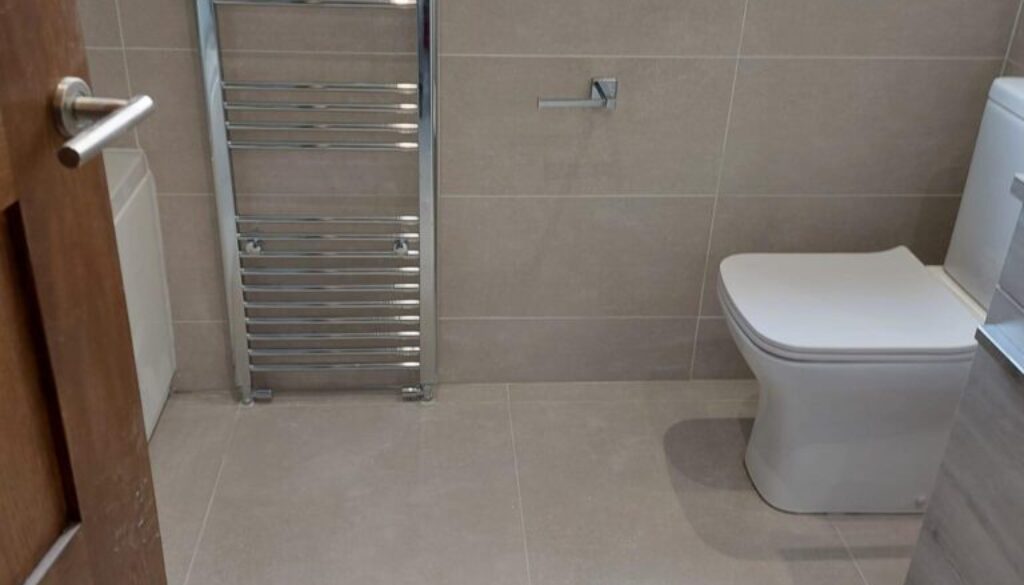
Tile size can have a noticeable effect on how spacious a bathroom feels. Larger tiles often work well in a small bathroom because fewer grout lines create a less cluttered appearance.
Light colours can reflect more light around the room, while using a similar palette across the bathroom floor and selected walls can help create a seamless look. This does not mean a small bathroom has to be plain. Patterned tiles can still work as a feature, and wood-effect porcelain can introduce warmth without making the space feel too busy.
If you are working with limited floor space, Mermaid Bathrooms has more practical ideas in our guide to making the best of a small bathroom.
Bathroom Tiles And Underfloor Heating
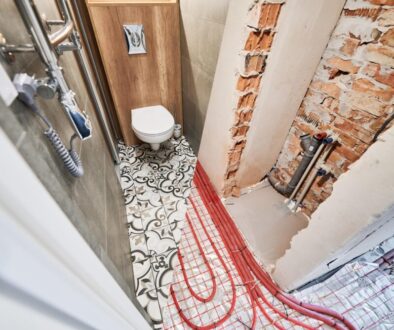
Tiled floors are well suited to underfloor heating because materials such as porcelain, ceramic and natural stone conduct heat effectively.
The system needs to be considered as part of the complete floor construction. The substrate, insulation, adhesive and tiles all need to be compatible so that movement and changes in temperature do not cause problems later.
Mermaid Bathrooms provides bathroom underfloor heating installation, allowing the heating system and finished bathroom floor to be planned together rather than treated as separate parts of the project.
Choosing Tiles For A Wet Room Floor
A wet room floor needs more planning than a conventional bathroom floor because it is designed to deal directly with water. Slip resistance, waterproofing and drainage all need to be considered before the final tiles are selected.
Porcelain is commonly used because it is durable and water-resistant. Smaller tiles and mosaic tiles can also work particularly well because they can follow the gradient towards the drain more easily.
The waterproofing underneath the surface is just as important as the tiles themselves. Mermaid Bathrooms can incorporate floor and wall tiling within a complete bathroom installation, so drainage, preparation and finishing details are considered together.
What Is The Current Trend In Bathroom Tiles?
Natural-looking surfaces continue to feature heavily in modern bathroom design, particularly marble effect, stone-effect and wood-effect porcelain. These materials give homeowners access to the appearance of natural materials without necessarily taking on the same maintenance requirements.
Large-format tiles are also popular because they reduce the amount of visible grout, while patterned tiles and mosaics are often used to introduce detail in smaller areas.
Rather than following one particular trend throughout the room, it can be more effective to combine a restrained main surface with a stronger feature.
Why Choose Mermaid Bathrooms?
Choosing the right tiles is only part of creating a bathroom that looks good and works properly. The preparation, layout and installation all affect how the finished room performs, which is why it helps to work with a team that can manage the wider project rather than treating the flooring as a separate job.
Mermaid Bathrooms is a family-run business with 33 years of experience designing and installing bathrooms across Thurrock and surrounding areas of Essex. Our team can take care of bathroom design, tiling, plumbing, electrical work, underfloor heating and installation, giving homeowners one point of contact throughout the project.
Our professional tiling service covers floor and wall tiling using porcelain, ceramic, marble, granite, mosaic and natural stone tiles. We also handle the preparation work that sits behind the finished surface, including levelling, backboards, grouting and sealing, as well as more difficult areas such as alcoves, curved spaces and extra-large tiles.
Because the tiles are considered as part of the complete bathroom, we can also advise on how the flooring will work alongside your chosen wall finishes, sanitaryware, furniture, lighting and heating.
Get In Touch With Mermaid Bathrooms
If you are planning a new bathroom and are unsure which floor tiles will work best for the space, Mermaid Bathrooms can help you compare the options as part of the wider design.
Whether you are considering low-maintenance porcelain, decorative ceramic tiles, natural stone or a combination of materials across the floors and walls, our team can advise on the practical and design considerations before installation begins.
Contact Mermaid Bathrooms to discuss your project and arrange a free, no-obligation consultation and quote. We work with homeowners throughout Thurrock and the surrounding Essex area and can help with everything from the initial bathroom design through to tiling and final installation.