Bathroom Heating: Best Heating Options For Your Bathroom
- What Heating Can You Have In A Bathroom?
- How Much Heating Does Your Bathroom Need?
- Heated Towel Rails
- Are Heated Towel Rails Worth Having?
- Bathroom Radiators
- Heated Towel Rail Or Radiator?
- Underfloor Heating For Bathrooms
- Is Underfloor Heating Enough To Heat A Bathroom?
- What Is The Best Heating For A Small Bathroom?
- How Can You Heat A Bathroom Without Central Heating?
- Which Bathroom Heating Option Is Most Efficient?
- Planning Bathroom Heating As Part Of The Design
- Why Choose Mermaid Bathrooms?
- Get In Touch With Mermaid Bathrooms
- Frequently Asked Questions
A bathroom that looks good but feels cold is never particularly inviting, especially during the colder months. Tiles, hard surfaces and regular ventilation can all make bathrooms feel cooler than other rooms, so heating deserves to be considered alongside the shower, bath, flooring and other parts of the design.
There are several bathroom heating options available, from heated towel rails and traditional radiators to underfloor heating and electric systems. The right choice depends on the size and layout of the room, the heating already installed in your home and whether you want one system to provide all the warmth or a combination of different solutions.
At Mermaid Bathrooms, heating is considered as part of the complete bathroom design. Our team can advise on underfloor heating, radiators and heated towel rails alongside the plumbing, electrical work, flooring and final layout.
What Heating Can You Have In A Bathroom?
The main bathroom heating solutions are radiators, heated towel rails, underfloor heating and fixed electric heaters designed for bathroom use.
A standard radiator connected to the central heating system remains a practical option for many homes. Heated towel rails combine room heating with somewhere to dry and warm towels, while underfloor heating creates warmth across the floor and removes the need to dedicate wall space to a radiator.
Some bathrooms use more than one heat source. Underfloor heating might provide consistent background warmth, for example, while a towel rail provides additional heat and keeps towels warm.
The room itself should guide that decision. A compact ensuite may have very different heating requirements from a large family bathroom with external walls and a large window.
How Much Heating Does Your Bathroom Need?
Choosing a bathroom heater based purely on its appearance can leave the room feeling cold even when the heating is running. The required heat output depends on several factors, including room dimensions, insulation, windows, external walls and the amount of ventilation.
Heat output for radiators and heated towel rails is commonly expressed in British thermal units, or BTUs, as well as watts. As a broad guide, a small bathroom may require around 2,000 to 3,000 BTUs, while larger spaces can require considerably more.
These figures should only be used as an indication because two bathrooms of the same size can lose heat at very different rates. A well-insulated internal room will usually retain warmth better than a bathroom with several external surfaces or older glazing.
When planning a new bathroom with Mermaid, the heating can be considered alongside the room layout so that the chosen radiator, towel rail or underfloor system suits the space rather than simply fitting into whatever wall area remains.
Heated Towel Rails
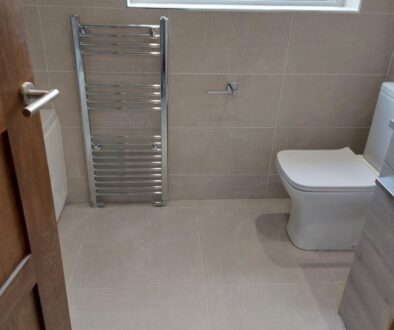
Heated towel rails are one of the most common heating choices for modern bathrooms because they serve a dual purpose. They contribute warmth to the room while also giving wet towels somewhere to dry between uses.
There are several types available. A towel rail can connect to the home’s central heating, operate using an electric element or use a dual-fuel arrangement that provides both options.
Central heating models work alongside the rest of the heating system, while electric towel rails can be controlled separately. Dual-fuel rails can be useful when you want warm towels without running the home’s main heating system.
The size and heat output of the rail still matter. A small decorative towel rail may be sufficient in a compact, well-insulated room but may not provide enough warmth for a larger bathroom.
When choosing a heated towel rail, consider where towels will actually hang as well as how the unit fits visually with taps, shower fittings and other finishes. Mermaid Bathrooms can incorporate heated towel rails as part of a complete bathroom installation, rather than treating them as an accessory added at the end.
Are Heated Towel Rails Worth Having?
For many bathrooms, yes, particularly when you value both warm towels and additional room heating. They use wall space efficiently and are available in sizes suitable for everything from a small ensuite to a larger family bathroom.
Their limitations are worth understanding. Towels covering much of the rail can reduce the amount of heat reaching the room, and smaller rails should not automatically be expected to replace a full-size radiator.
In a larger room, combining a heated towel rail with another heat source can provide a better result. Underfloor heating or a radiator can deal with the main heating requirement while the towel rail provides additional comfort.
Bathroom Radiators
Radiators remain one of the simplest ways to provide strong, consistent bathroom heating when the property already has a central heating system.
Standard panel radiators offer good heat output without requiring excessive floor or wall space. A flat panel radiator can suit a contemporary bathroom, while traditional column radiators work particularly well where the design has a more classic character.
Vertical radiators are useful when wall width is limited. Instead of occupying a long section of wall that could otherwise hold storage or bathroom furniture, a tall radiator uses the room’s vertical space.
This can be particularly valuable in smaller bathrooms, where every part of the layout needs to work harder. Mermaid’s guide to making the best of a small bathroom also considers heating alongside storage, flooring and other space-saving choices.
Heated Towel Rail Or Radiator?
The better option depends on how much heat the room needs and what you want the fitting to do.
A radiator is primarily designed to heat the room and may offer greater heat output for the wall space available. A towel rail provides heating too but adds the practical benefit of drying towels.
For smaller, well-insulated bathrooms, a suitably sized towel rail may be enough on its own. In larger spaces, a radiator can provide the main source of heat with a towel rail added for convenience.
You do not necessarily have to choose one or the other. If the layout allows it, combining different bathroom heating solutions can provide both strong room heating and the comfort of warm towels.
Underfloor Heating For Bathrooms
Underfloor heating is particularly well suited to bathrooms because it distributes heat across the floor rather than concentrating warmth around a radiator.
This helps reduce the feeling of cold tiles underfoot and creates more even heat distribution across the room. It also removes a wall-mounted heat source, which can make a significant difference where wall space is needed for storage, sanitaryware or furniture.
There are two main systems: electric underfloor heating and water-based underfloor heating.
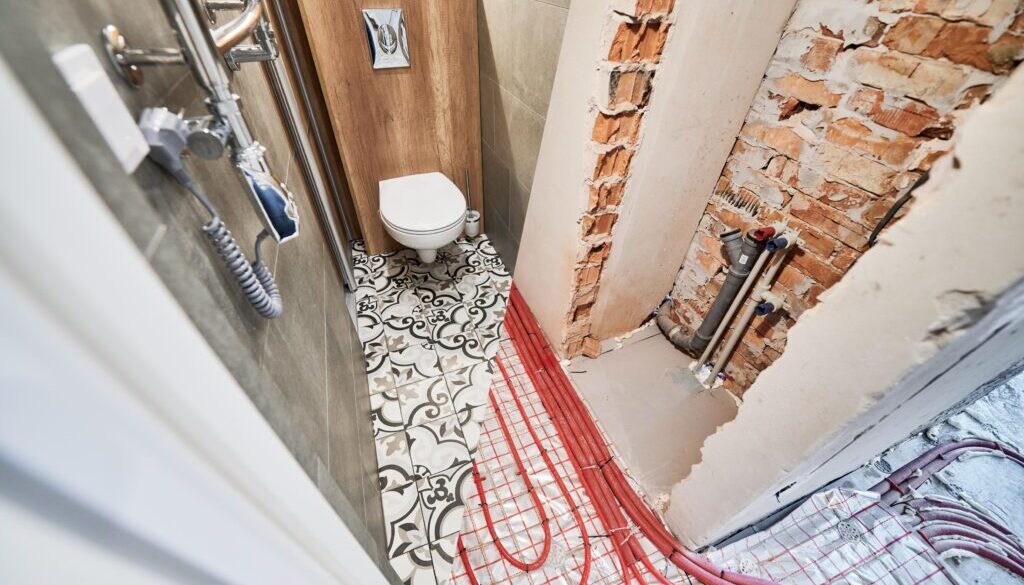
Electric systems generally use heating cables or mats installed beneath the finished floor. Their relatively slim construction makes them easier to incorporate into many bathroom refurbishments.
Water-based systems circulate heated water through pipes beneath the floor and can connect to the home’s wider heating system. They tend to require more consideration of the floor construction, which means they are often planned as part of a larger renovation.
Mermaid Bathrooms provides professional underfloor heating installation, allowing the system to be coordinated with the bathroom floor and other installation work.
Is Underfloor Heating Enough To Heat A Bathroom?
Underfloor heating can provide the main heat source in some bathrooms, but whether it is sufficient depends on heat loss, room size and the specification of the system.
In a well-insulated room, correctly specified underfloor heating can create consistent warmth without requiring a traditional radiator. A larger bathroom or one that loses heat quickly may benefit from an additional radiator or heated towel rail.
The floor finish also needs to be considered. Tiles and stone are commonly paired with underfloor heating because they transfer heat effectively, although the complete floor construction should be designed around the heating system.
For a new bathroom, it makes sense to decide on underfloor heating before the flooring is installed. Adding it later generally involves considerably more disruption than planning it into the renovation from the outset.
What Is The Best Heating For A Small Bathroom?
Limited space makes heating particularly important in a small bathroom because a poorly positioned radiator can interfere with storage, doors or other fittings.
A slim vertical radiator can provide useful heat output without occupying a wide section of wall. Heated towel rails are another practical option because one fitting can provide warmth and towel storage.
Underfloor heating goes further by removing the radiator from the walls altogether. This can free additional space for a vanity unit, storage or a larger shower while providing warmth across the floor.
The best solution depends on the layout rather than simply selecting the smallest heater available. Mermaid’s bathroom design service considers heating alongside circulation, storage and fixtures so that one feature does not create problems elsewhere in the room.
How Can You Heat A Bathroom Without Central Heating?
Bathrooms without access to central heating can still use fixed electric heating solutions.
Electric towel rails are one of the simplest options because they work independently from a boiler. Electric underfloor heating can also provide a discreet solution, particularly during a full bathroom refurbishment.
Fixed electric panel heaters designed specifically for bathrooms are another possibility. Any electrical heating equipment used in the room must be suitable for the bathroom environment and correctly installed in relation to wet areas.
Portable household heaters should not be treated as a substitute for a properly installed bathroom heating system. Mermaid Bathrooms provides electrical and installation services as part of complete bathroom projects, allowing electric heating to be planned alongside the rest of the room.
Which Bathroom Heating Option Is Most Efficient?
Efficiency depends on more than the type of heater. Correct sizing, insulation and control all affect how effectively a bathroom reaches and maintains a comfortable temperature.
An oversized heating system can use more energy than necessary, while an undersized one may run for longer without properly warming the room. Improving insulation and reducing unnecessary heat loss can therefore be as important as choosing between different radiators or underfloor heating systems.
Controls are useful too. Thermostats, timers and appropriately controlled heating allow warmth to be provided when the bathroom is normally used rather than heating an empty room throughout the day.
When comparing heating solutions, consider the system already installed in the property. Integrating a bathroom radiator with an existing central heating system may be straightforward, whereas a renovation provides a better opportunity to consider electric or water-based underfloor heating.
Planning Bathroom Heating As Part Of The Design
Heating tends to work best when it is planned before the bathroom layout has been finalised.
A radiator needs suitable wall space. A towel rail needs to be positioned somewhere that towels can be reached easily without obstructing other fittings. Underfloor heating needs to be coordinated with the floor construction and areas occupied by fixed furniture or sanitaryware.
Finishes matter too. A modern bathroom might use a flat panel or slim vertical radiator, while a column radiator can complement a more traditional interior. Heated towel rails are available in a range of designs that can coordinate with chrome, black and other bathroom finishes.
Considering these details early also prevents the heating from looking like an afterthought once the rest of the bathroom has been designed.
Why Choose Mermaid Bathrooms?
Heating is only one part of a successful bathroom renovation, and decisions about it affect the flooring, electrics, plumbing and available space elsewhere in the room.
Mermaid Bathrooms is a family-run business with 33 years of industry experience designing and fitting bespoke bathrooms. Our team can manage the wider project, including bathroom design, underfloor heating, plumbing, electrical work, tiling and installation.
This joined-up approach means heating can be specified around the actual bathroom rather than selected independently. Whether you want warm floors, a heated towel rail, a radiator or a combination of heating solutions, it can be incorporated into the design from the outset.
Get In Touch With Mermaid Bathrooms
If you are planning a new bathroom and are unsure which heating option will work best, Mermaid Bathrooms can consider the heating alongside the layout, flooring, plumbing and electrical requirements.
From underfloor heating and heated towel rails to complete bathroom design and installation, our team can help you create a bathroom that feels comfortable throughout the year without sacrificing useful space or the overall design.
Contact Mermaid Bathrooms to arrange a free, no-obligation consultation and quote for your bathroom project in Thurrock or the surrounding Essex area.