How to Prevent Condensation and Mould in a Bathroom: Ventilation, Heating and Design Fixes
- Understanding What Causes Bathroom Condensation
- Immediate Solutions You Can Implement Today
- Ventilation Upgrades for Long-Term Prevention
- Heating Solutions to Prevent Cold Surfaces
- Insulation and Design Improvements
- When to Use Dehumidifiers and Additional Equipment
- Why Choose Mermaid Designs for Your Bathroom Condensation Solutions
- Preventing Mould Growth and Health Issues
- Conclusion
- Frequently Asked Questions
Bathroom condensation starts when warm, moisture-laden air hits cold surfaces and releases moisture as water droplets. Left unchecked, those droplets feed mould growth, damage grout lines, cause peeling paint, and create health risks for everyone in the household.
This guide covers everything from quick daily fixes to ventilation upgrades, heating solutions, and insulation improvements that stop bathroom condensation at its source. Whether you need to reduce bathroom humidity after hot showers or redesign a poorly ventilated space, you will find practical steps here to prevent condensation and protect your home.
Understanding What Causes Bathroom Condensation
Condensation forms when moist air meets a surface cooled below the dew point. During a shower, hot water generates large volumes of steam. That moisture-laden air rises and spreads across bathroom walls, ceilings, mirrors, and window frames. Where those surfaces are cold, the temperature difference forces the humid air to release its moisture as visible water droplets.
UK housing stock makes this problem worse. A large proportion of British homes have solid walls, partial double glazing, or less than 200 mm of loft insulation. Homes with uninsulated cavity walls or solid walls appeared disproportionately in that count. During the colder months, exterior walls and single-glazed windows drop well below room temperature, turning every bathroom into a condensation hotspot.
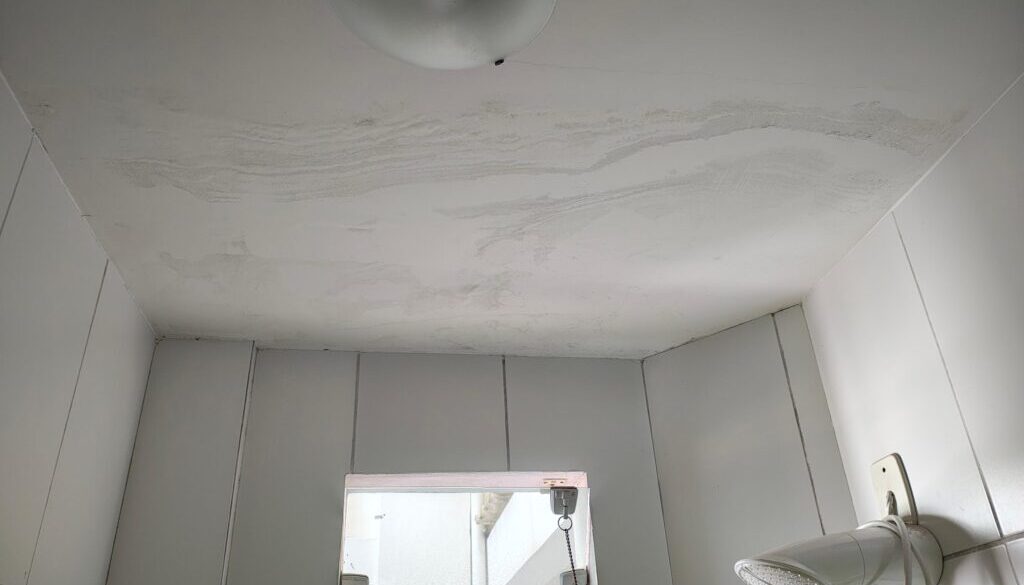
Not all condensation signals a problem. A brief misting on a window after a hot shower is normal. Persistent condensation, black mould along ceiling corners, damp patches on walls, or musty smells indicate that moisture is accumulating faster than it can escape. RICS guidance distinguishes condensation from rising and penetrating damp by its moisture source: condensation is driven by indoor humidity and cold surfaces, while other damp types involve structural leaks. This distinction matters because tackling bathroom condensation relies on controlling humidity and warmth, not structural waterproofing.
Immediate Solutions You Can Implement Today
Extractor fans remove humid air from bathrooms. Running your extractor fan before you step into the shower, keeping it on throughout, and leaving it running for 15 to 20 minutes afterwards clears the bulk of damp air before it settles on cooler surfaces. Keeping the bathroom door closed during showers prevents steam migration into hallways and bedrooms, where cold air and unheated walls create further condensation problems. If you have a window, opening a window helps to let humid air escape directly outside; even a small gap makes a measurable difference.
Wiping down wet surfaces immediately reduces moisture in the air. After every shower, use a squeegee on tiles, glass screens, and bathroom mirrors. Using a squeegee after showers helps prevent moisture buildup on surfaces that would otherwise stay damp for hours. Remove excess moisture from the bath edge, taps, and any shower curtain folds.
Reducing shower temperature cuts steam production at the source. A cooler shower generates less water vapour per minute, so the room accumulates less humidity overall. You do not need a cold shower; even dropping the temperature by a few degrees reduces the volume of warm air that saturates the room.
Optimising Your Extractor Fan Performance
A good extractor fan should run for 10-20 minutes post-shower to clear residual humidity. Fans with built-in humidity sensors (humidistat controls) detect when relative humidity climbs and activate automatically, which is particularly useful in a windowless bathroom where you cannot rely on fresh air from outside. Timer overrun functions achieve a similar result by keeping the fan running after the light switches off.
Check your fan’s performance periodically. Place a sheet of tissue against the grille while it runs; if the tissue does not hold, airflow has dropped. Common causes include dust buildup on the grille, blocked ducting, or a failing motor. Clean the grille and duct entry every three months. If the fan rattles, vibrates, or produces noticeably less air circulation than when new, replacement is overdue.
Daily Habits That Make a Difference
Wiping down surfaces after bathing takes under two minutes and removes the thin water film that becomes a breeding ground for mould. Focus on tiles around the shower area, the bath rim, and window sills where water collects.
Hanging damp towels outside the bathroom helps decrease moisture. Wet towels left on hooks or radiators inside the bathroom release more moisture into an already humid space. Move them to a well-ventilated room or an outdoor line. The same applies to bathmats: hang them over the bath edge or a rail where air circulation speeds drying. A well-ventilated bathroom should clear moisture within 30 minutes of showering when proper ventilation, surface wiping, and towel management work together.
Ventilation Upgrades for Long-Term Prevention
When daily habits alone cannot prevent condensation, upgrading your bathroom ventilation system delivers lasting results. The choice of fan type, ducting layout, and control mechanism each affect how much moisture the system removes and how reliably it performs across seasons.
Choosing the Right Extractor Fan
Under Approved Document F of UK Building Regulations, bathrooms require an extract ventilation rate of at least 15 litres per second (l/s) for intermittent fans. Ventilation systems should comply with UK Building Regulations, and this 15 l/s figure is the baseline, not a recommendation for every room. Larger bathrooms or those used by multiple people in quick succession benefit from fans rated above this minimum.
Fan types differ in how they handle ducting resistance:
- Axial fans mount directly in walls or windows and work well when the duct run is short and straight. They lose performance over longer runs.
- Centrifugal fans generate higher pressure, making them suitable for bathrooms where ducting must pass through a loft or run several metres to reach an exterior wall.
- Inline fans sit within the ducting itself, away from the bathroom, and can serve rooms where wall-mounting is impractical.
Extractor fans expel humid air outside to reduce condensation. Choose a fan with humidistat control for a windowless bathroom so it activates when the relative humidity rises above a set threshold (commonly adjustable between 60-90% RH). Bathrooms should maintain a relative humidity of 40-60% to prevent mould forming on cooler surfaces.
Noise matters in practice. A fan that disrupts sleep or conversation gets switched off by occupants, defeating its purpose. Look for models rated below 30 dB(A) at 15 l/s; centrifugal and inline types tend to run quieter than axial fans at equivalent flow rates.
Professional Installation Benefits
Building regulations require extract vents to terminate on the outside, not into loft spaces or other enclosed voids, to prevent moisture migration into roof timbers. Minimising duct length and bends is necessary to maintain the rated flow; each 90-degree bend in a flexible duct can reduce airflow by 10-15%.
Electrical wiring for bathroom fans must comply with IP-rated zone requirements. Fans installed above showers or baths need splash-proof enclosures rated for wet-zone environments. A qualified electrician ensures compliance and avoids the safety risks of DIY wiring in a room with running water.
In a poorly ventilated bathroom without windows, combining a humidistat exhaust fan with continuous background ventilation (such as trickle vents in adjacent rooms) maintains air exchange even when the fan is off. Positive input ventilation (PIV) systems, which introduce filtered outside air into the dwelling and push damp air out through natural leakage paths, have shown measurable reductions in indoor humidity in monitored UK installations.
Heating Solutions to Prevent Cold Surfaces
Cold surfaces are where condensation occurs. Keeping bathroom surfaces warm reduces condensation risk because warmer walls, floors, and ceilings stay above the dew point. Maintaining consistent heating reduces the temperature difference between the air and surrounding surfaces, cutting the conditions that cause water droplets to form.
Underfloor Heating Installation
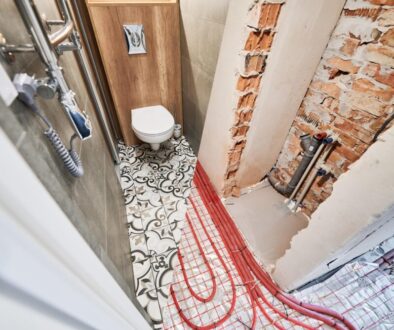
Underfloor heating distributes warmth evenly across the floor and lower walls, eliminating cold spots where condensation typically starts. Two types suit different renovation scenarios:
- Wet systems use heated water pumped through pipes embedded in or beneath the floor. Running costs are lower when paired with a heat pump or condensing boiler.
- Electric mat systems cost less to install but more to run. They suit smaller bathrooms or situations where connecting to the central heating system is impractical.
The best time to install underfloor heating is during a bathroom renovation, when flooring is already being lifted. Retrofitting into an existing floor adds complexity and cost but remains viable with low-profile electric systems.
Heated Towel Rails and Radiators
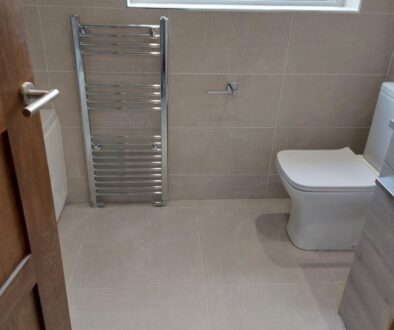
Heated towel rails help keep bathroom surfaces warm to reduce condensation while drying towels at the same time, removing a source of ongoing moisture. Dual-fuel models run on the central heating system during winter and switch to an electric element during warmer months, keeping the bathroom warm year-round without heating the entire house.
Thermostatic radiator valves on bathroom radiators allow you to set a target temperature that keeps surfaces above the dew point (typically 10-12°C at exterior wall surfaces in a heated room). Even low background heating overnight prevents exterior walls from dropping to temperatures where problem condensation builds up during early morning showers.
Insulation and Design Improvements
Insulating cold surfaces prevents water droplets from forming by raising the surface temperature above the dew point. Poor insulation is the root cause of persistent condensation in many older UK homes, where bathroom walls adjoining the outside lose heat faster than the heating system replaces it.
Window and Glazing Upgrades
Double glazing helps reduce condensation on bathroom windows. Improved glazing reduces heat loss through the glass, keeping the inner pane warmer and above the temperature where condensation forms.
For properties where full window replacement is restricted by planning rules or listed building status, secondary glazing or low-emissivity film applied to existing panes raises surface temperature without altering the building’s external appearance. Trickle vents built into window frames allow a controlled flow of fresh air into the room even with the window shut, supporting background ventilation without draughts.
Wall and Surface Treatments
Wall and ceiling insulation reduces cold spots where condensation and mould take hold. Adding cavity wall insulation, internal solid wall insulation, or loft insulation addresses the thermal weak points that drive persistent condensation on bathroom walls and ceilings.
Anti-condensation paint provides a surface-level defence against moisture. These products contain micro-sphere additives that help retain heat at the painted surface, slowing the rate at which it cools after heating. Laboratory tests have shown that treated surfaces take more than twice as long to cool compared to standard paint, delaying the formation of condensation by around 57%. Anti-mould paint combines moisture resistance with fungicidal agents to prevent mould growth on treated areas. Additionally, bacteria-reducing wall panels can help minimise mould development in bathrooms where traditional tiled or painted finishes are not sufficient.
For older properties with solid stone or brick walls, breathable lime-based finishes allow moisture to pass through the wall rather than trapping it behind an impermeable layer. Vapour barriers sit on the warm side of insulated walls to stop warm, moist air reaching the cold structure behind.
When to Use Dehumidifiers and Additional Equipment
Installing a portable dehumidifier helps manage bathroom moisture when ventilation or heating upgrades are not yet feasible. A dehumidifier can reduce bathroom humidity by extracting moisture directly from the air, lowering relative humidity below the 70% threshold where mould spores germinate on cool surfaces. Dehumidifiers extract moisture from the air to reduce condensation, and using a dehumidifier can complement an extractor fan rather than replace one.
Capacity should match the room’s moisture load. A small unit extracting 2-5 litres per day suits a bathroom used once or twice daily. Families generating more steam need units rated at 10-20 litres per day. Place the dehumidifier near the wet zone but away from direct splashing, and check its IP rating for safe operation in a damp environment.
Running costs depend on unit wattage and your electricity tariff. A 200W compressor dehumidifier running for four hours daily at 30p/kWh costs roughly 24p per day. Keep in mind that research on entrenched condensation shows dehumidifiers struggle to remove moisture from surfaces unless those surfaces are also heated and the room receives proper ventilation. Dehumidifiers work best as part of a combined approach, not a standalone fix.
Why Choose Mermaid Designs for Your Bathroom Condensation Solutions
We design bathrooms that manage moisture from the ground up. We specify extractor fans that meet the 15 l/s minimum required under Approved Document F and position them within 400 mm of the ceiling where they capture rising humid air before it condenses. We select ducting routes with minimal bends and correct termination points to maintain rated airflow.
Our renovation projects integrate underfloor heating, heated towel rails, and insulation improvements into the design from the start, so moisture control is built into the room rather than added as an afterthought. In windowless bathrooms, we combine humidistat-controlled extraction with continuous background ventilation to keep humidity within the 40-60% range.
We have delivered projects in social rented housing and heritage properties where serious condensation and mould were eliminated through these technical measures. If you are dealing with condensation that will not go away, our bathroom design team can assess your room, identify cold spots, and propose a solution tailored to your home, and our bathroom installation services in Essex can turn a new moisture-resilient design into a fully finished space.
Preventing Mould Growth and Health Issues
Mould can thrive in warm, damp environments like bathrooms, feeding on organic material in grout lines, sealant, plaster, and paint. Black mould can cause serious health risks with long-term exposure. Mould exposure can trigger respiratory issues and allergies, and long-term mould exposure can severely affect those with weakened immune systems.
Early signs include dark spots in ceiling corners, discolouration around grout lines, a musty smell when the bathroom door is opened, and peeling paint on the bathroom ceiling or window frames. These are the areas where condensation collects longest and drying takes the longest.
To treat existing mould, clean affected surfaces with a fungicidal wash or dilute bleach solution, then dry the area completely. Replace any sealant that has mould growing beneath its surface, as surface cleaning alone will not reach embedded spores. For households with young children, elderly occupants, or anyone with respiratory conditions, maintain relative humidity below 60% using ventilation and heating, and ensure that damp air from the bathroom does not migrate into bedrooms.
Keeping the bathroom door closed during and after showers, running the extractor fan for 15 minutes after showers, and removing excess water from surfaces are the most direct ways to prevent mould forming in the first place.
Conclusion
Stopping condensation in the bathroom requires action on three fronts: removing moist air through ventilation, keeping surfaces warm through heating, and reducing heat loss through insulation. No single fix resolves every case. An extractor fan rated at 15 l/s with timer or humidistat control handles daily moisture from showers. Underfloor heating and heated towel rails prevent the cold surfaces where condensation starts. Double glazing, wall insulation, and anti-condensation paint address the thermal weak points in older UK homes.
For persistent condensation or visible mould, professional assessment using thermal imaging or moisture meters identifies cold spots and moisture paths that DIY inspection misses. At Mermaid Designs, we combine technical moisture management with bathroom design that looks and works exactly as you need it to. Contact us to discuss your bathroom project and get condensation under control for good.