
Replacing an Old Bathroom vs Full Refurbishment: What Is Worth Doing?
- Replacing an old bathroom: what this means in practice
- Full refurbishment: what goes into a full bathroom renovation
- When replacing parts works, and when it's just cosmetic
- Costs and timeframes for replacing an old bathroom
- Building regulations: where many people make mistakes without realising
- Energy efficiency: where replacement really saves money
- Sell or stay? The weight of potential buyers
- How to decide without regret (checklist)
- Why choose Mermaid Bathrooms?
- Summary
- FAQ
Replacing an old bathroom can be as simple as replacing a few parts or turning it into a large bathroom project, with demolition, new electrical wiring, new ventilation, and a completely different layout.
The problem is that, halfway through, many people end up spending twice as much. They do a nice refresh, and months later, they have to face a real renovation because the mould comes back, the drain is still slow, or the electrical installation cannot support the upgrades.
The good news is that you can decide much more confidently whether it makes sense to replace or refurbish your bathroom when you look at what’s behind the problem. Whether it’s for aesthetics, functionality, environmental health, or other plans for the home.
Replacing an old bathroom: what this means in practice
When someone talks about replacing an old bathroom, they are usually thinking about an upgrade focused on what you see and touch. Such as bathroom fixtures (toilet, sink, taps), furniture, mirror, lighting, paint, some coatings and finishes. It is the type of update that gives it a new look without necessarily changing the plumbing system and without redesigning the bathroom layout.
This approach is usually more cost-effective when the bathroom is functional (with no clear signs of leaks or chronic dampness), when the problem is more visual than structural, and when the current layout already works for your routine. In fact, layout changes can be the most expensive part of the job, because they require moving pipes and adapting the existing system, and this is rarely the cheapest part of the work.
Full refurbishment: what goes into a full bathroom renovation
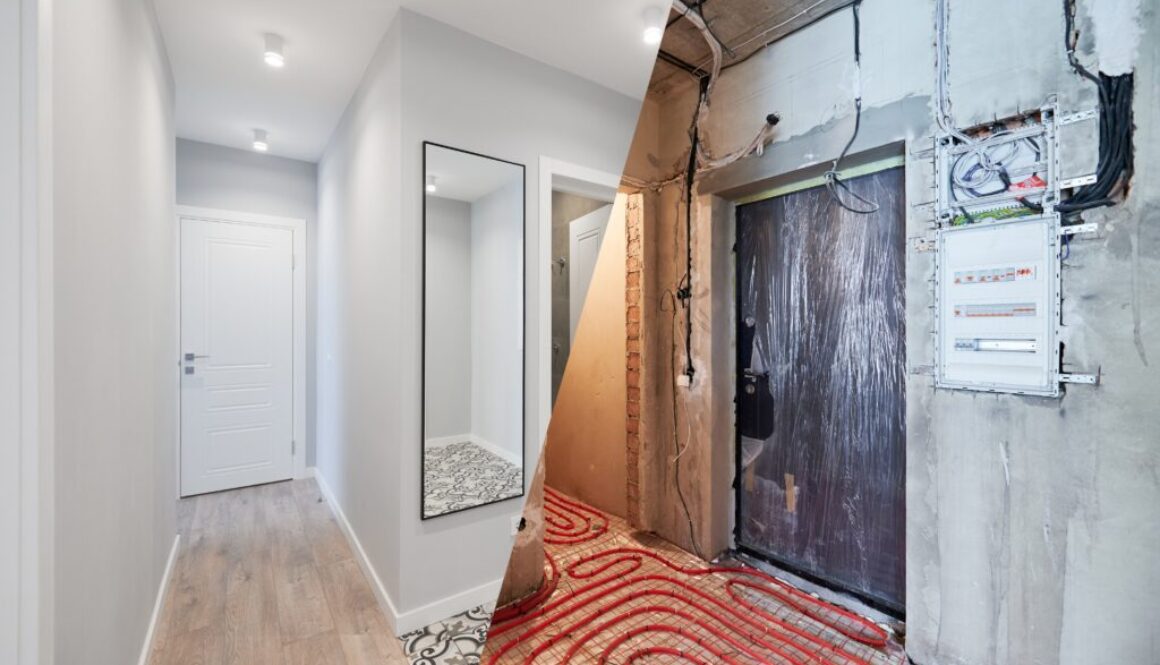
A full bathroom renovation is when you treat the bathroom as a whole room. Remove what is there, check what is hidden, fix the base and infrastructure, and then rebuild.
Typically, a complete renovation may include:
- Checking or replacing parts of the new pipework (or plumbing adjustments),
- Electrical and lighting (and sometimes dedicated fuse boxes/circuit breakers),
- Real improvement in bathroom ventilation (not just a cheap fan),
- Replacement of floor-to-ceiling coverings,
- Changes to the bathroom layout to gain floor space and circulation,
- And comfort upgrades such as walk-in showers and underfloor heating.
This is the best option when the bathroom is at its limit (or has already passed it). With persistent mould, leaks, chronic slow drains, warped flooring, loose grouting, for example. Or when the goal is a thorough and durable upgrade, especially if you plan to stay in the house for several years.
When replacing parts works, and when it’s just cosmetic
A good replacement really works when the bathroom is structurally sound, and what bothers you are items such as outdated style, worn metal fixtures, poor lighting, furniture without storage, or a set of fixtures that no longer matches the rest of the house.
But there is an important point: refurbishing that only addresses the surface may not solve hidden problems, especially those related to moisture, ventilation, and leaks. If water is going where it shouldn’t, painting and replacing fixtures will only buy you time.
Here are some signs that you may be facing a case that requires more than just the basics:
Recurring damp and mould
If the mirror is constantly fogged up, the paint peels or the ceiling frequently stains, it is likely that the bathroom ventilation is insufficient, and this is more than just an aesthetic issue. In England, Approved Document F sets minimum extraction rates for bathrooms. And when the room has no openable window, the guideline is that the extractor fan should continue to run for at least 15 minutes after the person leaves the room (run-on).
Leaks that seem small, but aren’t
A constant drip (the famous dripping taps) is the kind of thing that irritates and also signals system wear and water waste. If the leak has already caused stains, mould, or damage to wood and skirting boards, it is worth suspecting something bigger behind it.
Slow drains and recurring drainage issues
When water always takes a long time to drain, you may be dealing with blockages, poorly resolved pipe drops, or plumbing parts at the end of their life. In this case, replacing only what is visible tends to leave the problem intact.
Layout that disrupts daily life
Sometimes the bathroom isn’t broken; it’s just poorly suited to your current routine. In these cases, changing the bathroom layout may be the best investment, but it’s also where costs and complexity rise, because it involves plumbing and installations. Changing the layout and pipes can be expensive; on the other hand, replacing the sink, toilet, bathtub and/or shower can make a big impact without breaking the budget.
Costs and timeframes for replacing an old bathroom
On average, the cost of a bathroom renovation is around £4,500, but the range can vary greatly depending on the size of the room, the condition of the bathroom and the level of finish. £1,500 to £7,500 is a common range for a complete remodel. High-end and complex projects can go up to £14,000+.
The installation of a walk-in shower can vary greatly, between £200 and £2,000, depending on the type and the work involved. A simple downstairs loo usually has lower costs; £250 for a new toilet and £150 for a new sink, plus daily labour costs of between £300 and £500.
In terms of timeframes, what usually lengthens the work is the combination of layout + plumbing + electrical + floor-to-ceiling cladding. The further you stray from the current layout and the more you change what is behind the wall, the greater the chance of it becoming a project lasting several weeks (rather than a few days).
Building regulations: where many people make mistakes without realising
This is where a beautiful renovation can become a headache later on, especially in terms of ventilation and electrical work.
Ventilation: it’s not just about comfort, it’s about the health of the environment
Approved Document F (England) sets minimum rates and very specific guidelines for extraction in bathrooms. For bathrooms, the minimum intermittent exhaust rate is 15 l/s, and for continuous extraction, 8 l/s. And when there is no openable window, the fan must continue to run for at least 15 minutes after use. If you plan to give your bathroom a new lease of life, but the environment is chronically damp, prioritising bathroom ventilation is usually more worthwhile than replacing expensive finishes.
Electrical installations in wet areas
Bathrooms in the UK have specific electrical safety rules. Approved Document P (England) covers electrical safety in dwellings and explains when notification is required. On a day-to-day basis, a common way to avoid headaches is to hire professionals registered with competence schemes (CPS), who can self-certify work that is notifiable under Part P (England and Wales, depending on the scheme).
In addition, there is the issue of zones and the IP rating of equipment. NICEIC summarises that:
- In zones 1 and 2, IP X4/5 (splash/jet resistant, depending on exposure) is normally required,
- and in zone 0, IP X7 (immersion).
- And, if we talk specifically about extractor fans in zones 1 and 2, the IET guidance reinforces the minimum IPX4 when installed in these areas (following the manufacturer’s instructions).
Energy efficiency: where replacement really saves money
If the goal is to save money in the long term (and not just make things look nice), some replacements have a clearer return on investment. Toilets account for about 25% of domestic water use, and dual flush models use 4-6 litres per flush, while older models can use up to 13 litres.
A low-flow shower head can use around 6 litres per minute, while a standard shower head can use 10-15 L/min. This directly relates to energy efficiency because less hot water used in the shower tends to reduce the energy spent on heating.
Sell or stay? The weight of potential buyers
When the focus is on selling, the question is not only how much it costs, but how much it improves the perception of the property. Renovating the bathroom can add 3% to 5% to the value of the house, but to generate value, the rest of the property also needs to be in good condition. Changing the layout and plumbing can be expensive. Replacing items such as sinks and toilets, or bathtubs and showers, can have a big impact without breaking the bank.
In other words, for potential buyers, what often wins them over is a clean, well-lit bathroom with consistent finishes, no signs of mould, leaks or makeshift repairs. If you are selling soon, a smart upgrade may be more effective than a huge renovation that exceeds deadlines.
How to decide without regret (checklist)
If the problem is what appears, start with a well-planned replacement; if the problem is what comes back, consider a complete refurbishment. If you have a functional existing bathroom with no signs of water damage and want to modernise its look, storage and comfort, replacement tends to be sufficient (and easier on your pocket and time).
If you have persistent mould, poor ventilation, recurring leaks, slow drains, and signs of deterioration, it is safer to treat it as an entire bathroom and address the infrastructure. Minimum ventilation, safe electrical wiring, and healthy plumbing are the kinds of things that no one sees in the photo in the advertisement, but everyone feels in daily use.
If you want to change the routine of the room (for example, replace a bathtub with a walk-in shower, open up circulation, gain floor space), this usually leads to a full remodel, because the bathroom layout and plumbing come into play.
Why choose Mermaid Bathrooms?
When the decision is between changing a little and redoing everything, what makes the difference is not just choosing beautiful pieces, but having a process that avoids rework and surprises during the work. Mermaid Bathrooms operates as bathroom fitters in Thurrock and the surrounding area. It is a family business with 33 years of experience and covers a 50-mile radius from Stanford Le Hope.
Mermaid takes a comprehensive approach, covering stages such as plumbing, tiling and electrics, as well as the installation of fixtures, for a smoother renovation from start to finish. Whether the idea is to do a well-planned refresh or a full bathroom renovation with a change of layout, ventilation and electricals, the benefit lies in planning the bathroom design based on what the home needs today and what will continue to work in 5-10 years’ time.
Summary
Replacing an old bathroom (spot replacement) is usually the best choice when the bathroom is in good condition, and the goal is to modernise bathroom fixtures, appearance and storage without changing the current layout.
Full refurbishment is more worthwhile when there are signs of structural problems, such as persistent damp, leaks, slow drains and poor layout, or when you want to truly change the experience of the room (e.g. walk-in shower, underfloor heating, reconfiguration of the bathroom layout).
Ventilation and electrical work are not minor details. And when it comes to selling, smart upgrades can have a big impact. Hiring a full-service firm with experienced professionals can make all the difference and save you headaches.