Common Small Bathroom Design Mistakes (And How to Avoid Them)
- Forcing Too Much Into A Tiny Floorplan
- Treating Storage As An Afterthought
- Ignoring Light, Colour, And Reflections
- Choosing The Wrong Materials For A Wet, Compact Space
- Overlooking Practical Details That Drive You Mad Later
- Going Fully DIY Instead Of Using Professionals When It Matters
- How To Plan A Small Bathroom Renovation The Smart Way
- How Mermaid Bathrooms Can Help
- Frequently Asked Questions
Before you sign off on plans, order tile, or commit to a freestanding bath you have been eyeing on Pinterest, pause. Most bathroom design mistakes happen in the planning stage, not during installation, and they are far more expensive to fix once the plumber has left.
Many Pinterest-perfect rooms ignore real-world UK constraints, especially in a small bathroom or a tiny bathroom:
- Tight 1.5m to 1.8m wide rooms in Victorian terraces and modern flats
- Awkward window and bathroom door positions that limit bathroom layout options
- Plumbing that has not been updated since the 1970s
- Building regulations around ventilation and bathroom lighting
At Mermaid Bathrooms, we design and install bathrooms across the UK, and professional small bathroom design is often what prevents expensive work, broken tiles, and moved pipework later.
In this guide, we will cover the biggest bathroom design mistakes we see most often, and exactly how to avoid them.
Forcing Too Much Into A Tiny Floorplan
A classic small bathroom design mistake is treating a small space like a larger room. UK bathrooms often sit around 1.7m x 2.2m, sometimes less. That is not enough space for every fixture you saw online.
Trying to squeeze in both a bath and a separate shower in a tiny bathroom often sacrifices floor space, creates tight corners, and makes the room feel awkward. You may still spend the same budget, but end up with less comfort and less usable space.
How to avoid it
- Mark footprints with masking tape to scale on the floor and test movement
- Check the bathroom door swing, drawers, and shower entry for clashes
- Prioritise based on how the household actually uses the bathroom
A practical bathroom layout order that often improves flow is:
- Vanity unit near the bathroom door
- Toilet in the middle zone
- Shower or bath at the far end
This usually makes all the difference in how the room feels when you walk in.
Treating Storage As An Afterthought
If storage is not planned early, you end up with open storage everywhere. Bottles on the vanity unit, razors on a window ledge, towels on the radiator, and cleaning products in sight. That clutter is a common mistake that makes a small bathroom feel chaotic.
How to avoid it
Do a quick inventory before choosing cabinets:
- Daily shower items, spare toiletries, medications
- Cleaning products
- Spare toilet rolls and towels
- Hair tools and grooming items
Then choose storage solutions that fit the small bathroom:
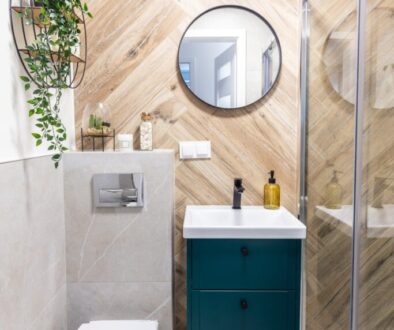
- Wall-hung vanity unit with drawers (better than open shelving)
- Mirrored cabinet above the basin for daily items
- Recessed niches on the shower back wall for shampoo and shower gel
- Robe hooks and a towel bar behind the bathroom door to protect wall space
Be careful with oversized floor-to-ceiling cabinets. In a small bathroom, they can make the room feel like a corridor. Slim, shallow cabinets often work better, especially where there is limited wall space.
Clever storage using vertical space
Vertical space is often underused. Built-in shelves above the toilet or above the door can provide extra storage for items used weekly or monthly. Done neatly, this adds additional storage without making the room feel cramped.
Ignoring Light, Colour, And Reflections
Bad bathroom lighting makes small spaces feel gloomy or clinical. A single overhead lighting point in a windowless room leaves corners in shadow and makes the mirror area unflattering.
How to avoid it
Use layered lighting:
- Ceiling lighting for general illumination
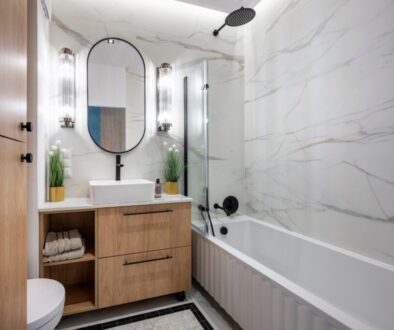
- Task lighting at the mirror (wall lights or an illuminated mirror)
- Accent lighting for depth (for example, under a vanity unit or along a niche)
Good lighting changes the room’s feel instantly and helps create more space visually.
Colour and tile guidance
Pale neutral colours usually work best in a small bathroom because they reflect light. If you love bold colours, keep them to one feature wall rather than all four walls.
Mirrors also matter. Larger mirrors can create the illusion of doubled depth and bounce extra light around the room. If you have a window, position mirrors to reflect natural light where possible.
Avoid a common lighting error: downlights directly over the mirror without side lighting. That setup creates harsh shadows. Side lighting at face height is usually more flattering and more practical.
Choosing The Wrong Materials For A Wet, Compact Space
In a small bathroom, every surface sits close to steam and water. Poor material choice leads to staining, warping, and mould.
Materials that commonly fail
- Solid wood flooring
- Standard laminate
- Untreated timber accessories near the shower or bath
Better options
- Porcelain tile on the floor with appropriate slip resistance
- Textured natural stone (with regular sealing)
- Bathroom-rated LVT is suitable
For shower tile and grout, small errors show more because everything is at arm’s length. Consider:
- Narrow grout lines where appropriate
- Mid-tone grout to hide dirt better than pure white
- Durable grout options in wet areas
Ventilation mistakes
Relying on a window alone is one of the common bathroom design mistakes in the UK. In winter, windows stay shut, moisture lingers, and mould follows. A properly specified extractor fan is essential in a bathroom renovation, especially for a tiny bathroom with hard surfaces.
Overlooking Practical Details That Drive You Mad Later
Some bathroom design mistakes only show up once you start using the room daily.
Shower mixer positioning
Placing the mixer directly under the shower head means you get hit with cold water before it warms. Position the controls so you can reach in and turn the shower on without stepping under the spray. A thermostatic mixer helps maintain temperature and reduces cold water shocks.
Door and drawer conflicts
Check that every door and drawer can open fully without hitting:
- Radiators
- Toilet
- Shower screens
- Towel bar and robe hooks
Plan accessories before tiling. Decide where towels hang, where toilet roll sits, and where toothbrushes live. Small space planning is about eliminating daily annoyances.
Tile ordering
Order extra tile from the same batch. In small bathrooms, colour shifts and missing replacements are obvious, particularly with large-format tile.
Going Fully DIY Instead Of Using Professionals When It Matters
Bathrooms are expensive to redo, and small spaces magnify errors. Some tasks are reasonable DIY for confident homeowners, like painting with bathroom-rated paint or fitting simple accessories. But critical wet-room tasks should be handled by professionals.
Jobs are best left to professionals.
- Plumbing and plumbing fixtures
- Waterproofing and tanking
- Electrics to meet UK requirements
- Complex tiling and shower installation
- Underfloor heating installation and controls
Professional bathroom design and design experts often save money by preventing re-work, ordering correctly sized fixtures, and coordinating trades efficiently. This is especially true in a bathroom renovation where layout changes are planned.
How To Plan A Small Bathroom Renovation The Smart Way
A smart plan prevents the biggest bathroom design mistakes.
- Finalise design, bathroom layout, and specification first
- Order everything before work starts
- Strip-out and first fix (plumbing, electrics, waterproofing)
- Tiling and floor installation
- Second fix (toilet, vanity unit, shower, accessories)
- Decoration and finishing touches
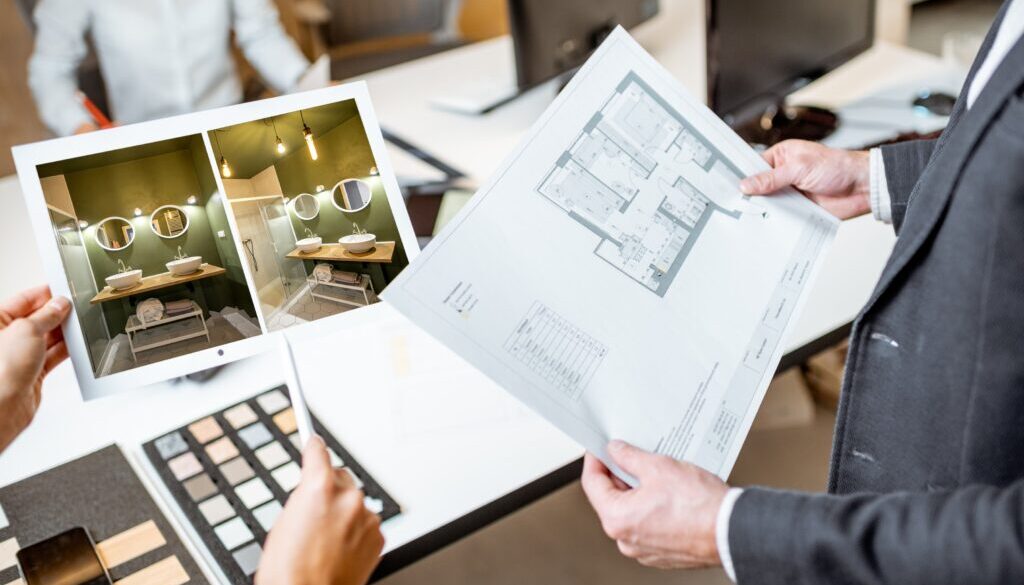
Sample materials in the actual room. Light changes undertones. What looks warm in a showroom can look cold at home, especially with limited natural light.
How Mermaid Bathrooms Can Help
At Mermaid Bathrooms, we provide professional small bathroom design and full installation. We help you avoid design mistakes by:
- Planning bathroom layout and circulation so you have enough space
- Specifying compact fixtures, wall-mounted options, and wall-hung fixtures to protect floor space
- Building storage solutions, hidden storage, and additional storage into the design from the start
- Designing bathroom lighting with layered lighting, not just overhead lighting
- Selecting materials that perform in wet, compact rooms
If you are planning a small bathroom update, send measurements and photos, and we can advise on layout, storage, lighting, and specification. Getting it right on paper is what prevents expensive changes later.